Solar Innovation for Costa Rica’s Energy Future
Costa Rica is exploring innovative solutions such as floating solar energy. A strategic approach that combines innovation, sustainability, and energy security. Discover how this technology can transform the future of power systems.
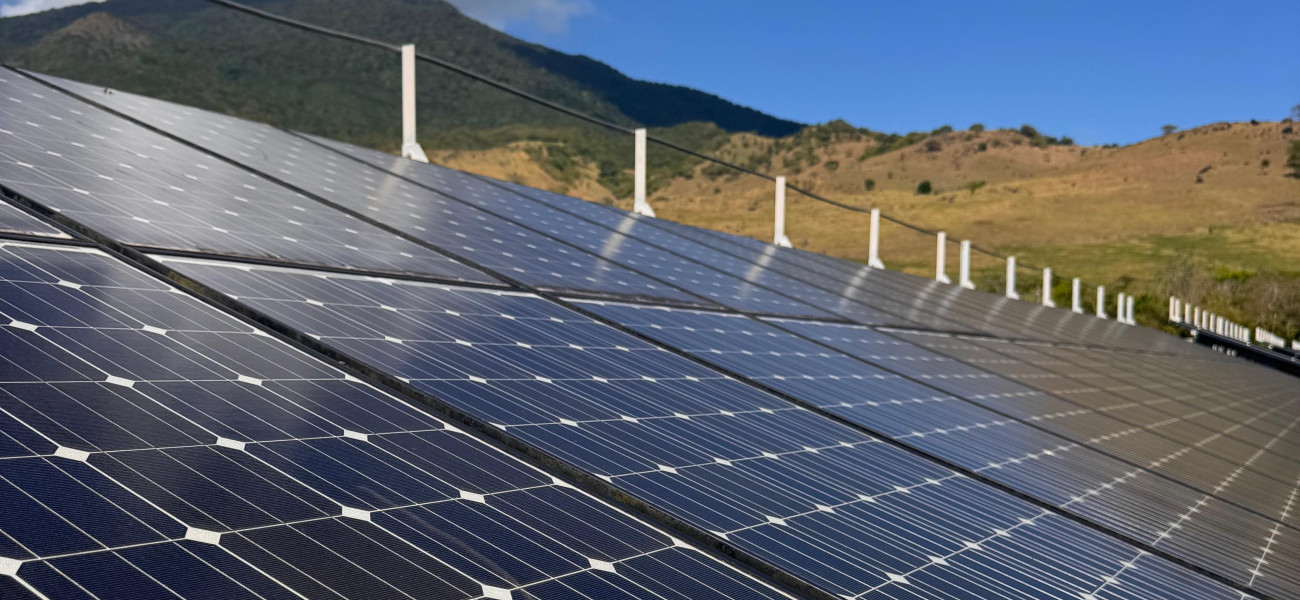
Photovoltaic panels in Guanacaste. © GIZ/Andrés Domian Astorga
Costa Rica has historically been a leader in renewable energy. However, in a context of increasing climate variability and pressure on water resources, the country faces the challenge of further diversifying its energy matrix without compromising sustainability, security, or competitiveness.
In this scenario, initiatives such as the ACCIÓN Clima III Project are driving the exploration of innovative solutions to strengthen the national electricity system. One of the most promising approaches is the incorporation of new solar technologies, such as floating solar energy.
Driving the energy transition through ACCIÓN Clima III
The project is an international cooperation initiative that aims to support countries in implementing concrete measures to mitigate climate change. In its energy component, the project focuses on promoting clean and efficient technologies, strengthening technical and institutional capacities, and supporting evidence-based strategic decision-making.
In Costa Rica, this work translates into supporting key actors in the energy sector, such as the Costa Rican Electricity Institute (ICE), to evaluate new renewable generation alternatives that complement existing sources.
Solar energy in Costa Rica: progress and opportunity
Although Costa Rica has a predominantly renewable electricity matrix, mainly based on hydropower generation, solar energy has gained prominence in recent years.
Its growth responds to several needs:
- diversification of the energy matrix,
- reduction of dependence on water resources, especially during dry periods,
- and greater resilience to extreme climate events.
The current context, marked by phenomena such as El Niño and changes in precipitation patterns, further highlights the importance of integrating complementary sources such as solar energy, which can generate power when hydropower is limited.
Floating solar energy: a strategic innovation for Costa Rica
In line with these challenges, ACCIÓN Clima III is supporting the assessment of emerging technologies, including floating solar energy, a solution that consists of installing photovoltaic panels on water surfaces such as reservoirs.
This technology not only represents a technical innovation but also a strategic opportunity aligned with the needs of Costa Rica’s electricity system, as outlined in the 2024–2040 Electricity Generation Expansion Plan of the Costa Rican Electricity Institute (ICE).
Its main benefits include:
- Use of existing infrastructure: it enables the use of reservoir surfaces without requiring new land.
- Increased energy efficiency: the cooling effect of water improves solar panel performance.
- Reduced evaporation: it contributes to water conservation, particularly important during drought conditions.
Globally, floating solar technology has experienced significant growth, positioning itself as a strategic alternative in countries with high population density or limited land availability.
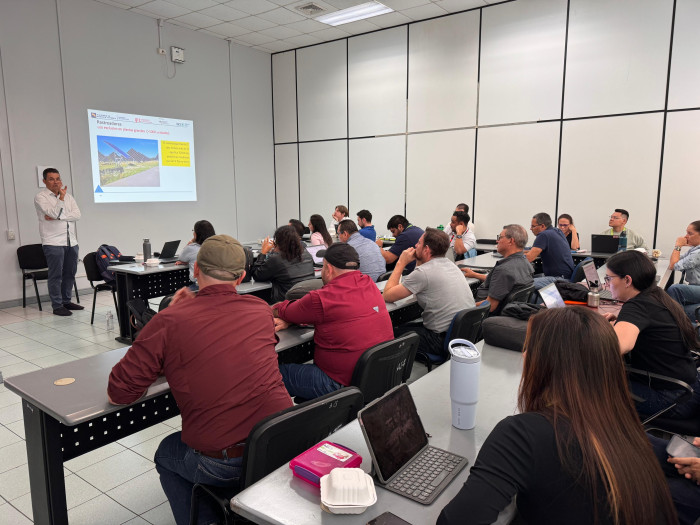
Experience exchange and presentation on best practices regarding solar photovoltaic technology with international experts. © GIZ/Andrés Domian Astorga
Synergies with hydropower: more than sharing space
One of the most strategic aspects of floating solar energy is its ability to integrate directly with hydropower generation, creating hybrid systems that maximize resource use.
In Costa Rica, where hydropower reservoirs are a central component of the electricity system, this integration allows:
- Dual use of water and energy resources
Reservoirs become not only water storage for hydropower but also platforms for solar generation, increasing their energy value without altering their primary function. - Complementary generation management
Solar energy is produced mainly during the day, while hydropower can be regulated according to demand. This enables coordinated operation, where solar reduces the need for water release during daylight hours, preserving water for peak demand or low solar generation periods. - Greater system flexibility and resilience
This combination allows for more efficient system management, particularly during droughts or climate variability, by optimizing the use of stored water. - Optimization of existing infrastructure
By being located on reservoirs already connected to the grid, floating solar projects can leverage existing transmission lines, access routes, operational infrastructure, and technical capacities, reducing costs and accelerating deployment. - Additional environmental benefits
Partial coverage of reservoirs can reduce water evaporation and limit algae growth, contributing to improved water resource management.
Fieldwork: applying knowledge to the national context
As part of this process, a field visit was conducted in Costa Rica in March 2026 with the participation of high-level international consultants:
- Fraunhofer Institute for Solar Energy Systems, one of the world’s leading solar research centers,
- and Ecovision, a company specialized in the development and advisory of photovoltaic projects.
During the visit, several sites with potential for floating solar projects were assessed. This work made it possible to understand the specific characteristics of reservoirs, identify technical, environmental, and operational conditions, and evaluate potential limitations and challenges for implementation. Such on-site analysis is key to translating theoretical potential into viable, context-specific projects.
The technical visit concluded with a workshop for exchange and feedback, addressing key aspects such as:
- fundamentals and best practices in floating solar projects,
- operation and maintenance of photovoltaic systems, both floating and land-based,
- and technical recommendations for structuring tenders and future projects.
These spaces not only enable knowledge transfer but also strengthen local capacities and align criteria among sector stakeholders.
Towards a more renewable future
The incorporation of new technologies such as floating solar represents a concrete opportunity for Costa Rica to continue leading in renewable energy while adapting to climate change challenges.
The work supported by ACCIÓN Clima III demonstrates that the energy transition depends not only on major decisions but also on collaborative processes, rigorous technical analysis, and the exploration of innovative solutions.
In a context where sustainability and resilience are increasingly important, initiatives like this pave the way toward a more diversified, efficient, and future-ready energy system.
- Country: Costa Rica
- Project:
- Contact: