NDCs 3.0: How New Climate Commitments Are Born in Central America
The heart of the Americas is home to nearly 12% of the planet’s biodiversity, in a region where daily life is directly shaped by the climate, from harvests and coastlines to mountain communities. Central America may be small in size, but it carries a significant climate responsibility. Countries across the region are updating their Nationally Determined Contributions (NDCs) with support from the International Climate Initiative (IKI, from its acronym in German), commissioned by Germany’s Federal Ministry for the Environment, Nature Conservation, Nuclear Safety and Consumer Protection (BMUKN, from its acronym in German), and implemented by the German Development Cooperation (GIZ, from its acronym in German).

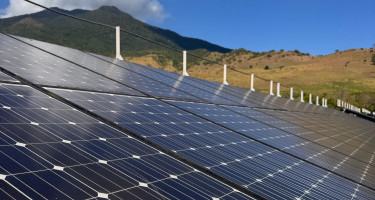
Stock photo
Costa Rica, Belize, and El Salvador are strengthening their climate goals by updating their Nationally Determined Contributions, blazing a trail of clear, realistic, and Paris Agreement-aligned ambitions.
Through IKI, Germany has accompanied all three countries for several months to translate their climate ambition into applicable roadmaps based on indicators, conditional and unconditional targets, mitigation and adaptation analyses, and financing mechanisms.
How The New Commitments are Born
Costa Rica: A Participatory, Achievable, and Measurable NDC With Clear Responsibilities
Costa Rica presents its “CND 3.0” as an accessible and highly participatory climate instrument, moving past the NDC concept to rename it “CND,” using the Spanish acronym and thus promoting social ownership and government commitment.
It was designed by the Ministry of Environment and Energy (MINAE, from its acronym in Spanish) and its Climate Change Directorate (DCC), with support from the IKI projects, ACCIÓN Clima and Support Project for the Implementation of the Paris Agreement (SPA).
Multiple workshops and co-creation processes held from coast to coast, with more than 360 participants, made it possible to set concrete targets and respond to national priorities without leaving anyone behind.
Costa Rica’s CND 3.0 becomes a clear, concrete, and pragmatic strategy that sets achievable goals for climate action. This update places a strong emphasis on establishing SMART indicators, which are validated and structured in ways that facilitate monitoring and reporting, with three strategic pillars:
- C = Collective and Coherent
- N = Nature
- D = Decarbonized
Other notable actions:
- Alignment with the National Decarbonization Plan to strengthen climate action coordination and effectiveness in the country.
- A communication strategy to turn the instrument into a public and easily understandable tool, and the creation of the Spanish-language “CND” concept.
- Inclusion of diverse perspectives from multiple sectors: youth, Indigenous peoples, women, rural communities, the private sector, municipalities, and more.
- Delivery of the final document during COP30.

© ACCIÓN Clima
Belize: Adaptation and Mitigation With Participatory Vision
Belize positions itself as a key country in the protection of marine and forest ecosystems, and its NDC 3.0 reflects this vision by integrating a robust update in both adaptation and mitigation, with climate goals that can be implemented and monitored using national capacities.
Funded by the IKI SPA and NDC-TEC projects, Climate Analytics supported the development of modeling, scientific analyses, and an implementation plan to ensure that the environmental commitments are realistic and financeable. This update is rooted in a science-based vision and active stakeholder inclusion.
The participatory process unfolded over several months, including virtual and in-person workshops with representatives from government, civil society, academia, and the private sector, consolidating an open and transparent process.
Other notable actions:
- Validation workshop with 85 representatives from the private sector, civil society, and government
- NDC technical reviews by stakeholders
- Implementation plan development
- Training to strengthen government and technical staff capabilities to develop modeling for NDC implementation and monitoring
El Salvador: National Targets Toward a Low-Carbon Economy
El Salvador’s NDC 3.0 moves beyond sector-specific targets and moves toward a national emissions-reduction commitment for 2035. The update is led by the Ministry of Environment and Natural Resources (MARN, from its acronym in Spanish), through its Technical Office, coordinating institutional stakeholders and international cooperation.
With support from SPA, the mitigation component was strengthened through the scientific construction of greenhouse gas (GHG) emissions scenarios, the national inventory, and realistic targets that distinguish between actions financed with domestic resources (unconditional) and those supported internationally (conditional).
Technical participation of more than 24 institutions and multilevel, cross-sector dialogue have marked the process. More than 12 workshops made it possible to validate measures, define policies, and build a climate vision that integrates the economy, sustainability, and transparency.
Other notable actions:
- Strengthening the technical team’s capacity to develop the 2023-base national GHG inventory
- Design of national-level conditional and unconditional mitigation targets
- Definition of the policies, actions, and measures (PAMs) to be considered in mitigation scenarios
- Strengthening the capabilities of the institutions involved

© Ministry of Environment and Natural Resources (MARN)
This is how the region commits to achievable, transparent, and sustainable climate action, demonstrating that resilience is built through knowledge and technical cooperation, through participatory processes, and by including the many sectors that bring different perspectives, needs, and realities.
- Country: Belize, Costa Rica, El Salvador
- Project:
- Contact:
Edna Valle