Beyond the Region | Inspiring Youth to Protect Biodiversity in Ecuador
With support from IKI Small Grants, Germany’s local climate and biodiversity action programme, Ecuador’s Instituto Nacional de Biodiversidad (INABIO) piloted hands-on biodiversity education in 13 schools.
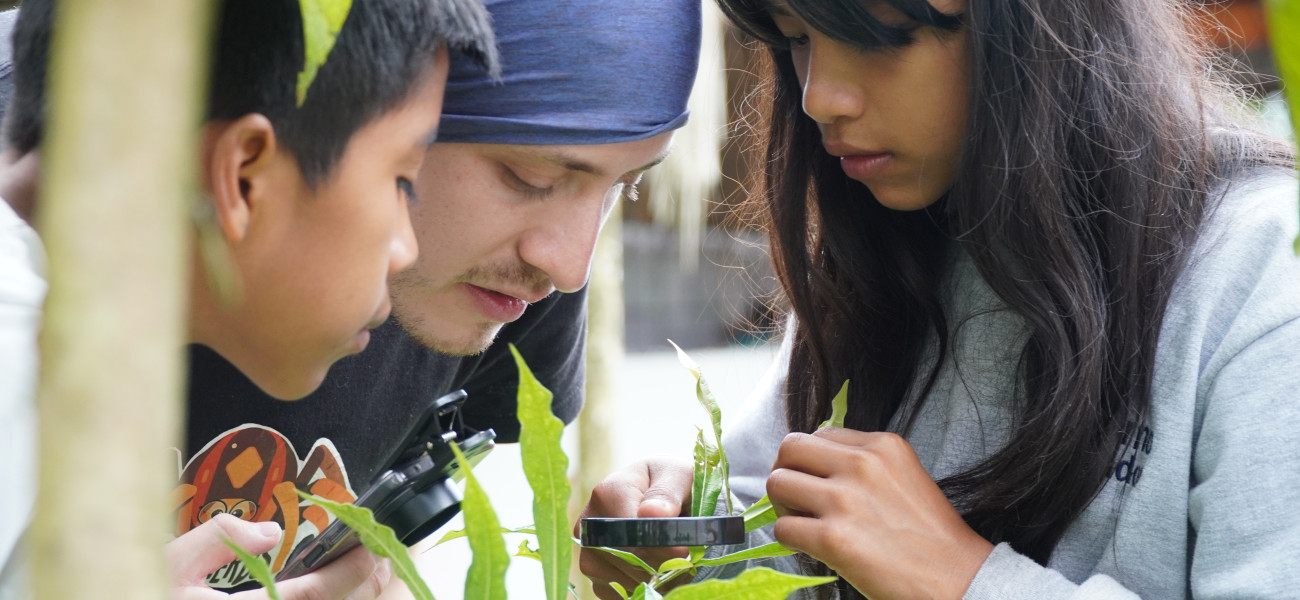
Students focused on documenting biodiversity and asking scientific questions about their local ecosystems. © INABIO
What began as a small-scale initiative has now reached over 1,000 schools nationwide through integration into Ecuador’s national curriculum. The project demonstrates how locally led, context-specific education – when trusted and funded – can start lasting systemic change nationwide.
A project rooted in the classroom
In one of the world’s biodiversity hotspots, a national shift in environmental education is underway. With support from IKI Small Grants, Ecuador’s Instituto Nacional de Biodiversidad (INABIO) helped pioneer a new approach to teaching biodiversity – one that now reaches schools across the country. It began with just thirteen schools. Through a pilot project, INABIO – supported by IKI Small Grants – set out to integrate biodiversity, climate change, and resource management into students’ everyday learning. But instead of arriving with a ready-made curriculum, they started with observation. “We didn’t arrive with a solution,” says Diego Inclán, Director of INABIO. “We arrived to the schools and learned from the community at the first stage. I mean the teachers, the kids, and the parents. We got the perception of what they feel, what they need – and then we developed tools together.”
Learning to see what was always there
The first step was reawakening perception. In many urban schools, biodiversity was something hidden or unfamiliar. INABIO’s team invited students to explore their surroundings, often for the first time. Equipped with smartphones and the iNaturalist app, which is part of a citizen science project for nature observation, children documented spiders, birds, or insects in schoolyards they’d never noticed before. “Some schools are not green at all,” Diego explains. “But we went outside to search for signs of biodiversity. And then they started to realise – there is biodiversity out there, even if it’s hiding.”
Hooked yet? Read the full story here.
- Contact:
IKI Small Grants